The online course Conservation and Restoration Techniques – Polychrome Wood Sculpture offers a comprehensive and practice-oriented approach to the study of historical polychrome surfaces on wooden sculptures.
Participants will explore essential restoration techniques applied to polychrome wood, including diagnostic methods, material identification, cleaning strategies, consolidation processes, reintegration criteria, and ethical decision-making frameworks.
Designed to bridge theory and professional practice, this course provides clear methodologies grounded in conservation principles, international standards, and real-case applications. Whether you are beginning your training or refining your expertise, this program delivers structured and reliable knowledge for responsible intervention.
Language: English.
Also available in: Português | Español
About the online course Conservation and Restoration Techniques polychrome wood sculpture
You will learn all the stages of intervention in a systematic way, from the fundamental principles, the analysis of production techniques, the diagnosis of pathologies and the restoration techniques applicable to polychrome wood sculpture.
Examples of the restoration techiques of sacred images are presented, but with methodologies applicable to various types of gilded and polychrome wood artworks.
The course price includes lifetime 24/7 access to:
- Lessons for each program topic
- Tutorial videos
- Work instructions
- Case study analysis
- Evaluation (1 final quiz)
- Certificate.
Learning objectives
By the end of this course, participants will be able to:
-
Understand the historical and material complexity of polychrome wood sculpture
-
Identify deterioration mechanisms affecting wooden supports and polychrome layers
-
Apply appropriate restoration techniques for cleaning, consolidation, and reintegration
-
Select compatible materials based on scientific and ethical criteria
-
Develop structured intervention proposals aligned with conservation standards
-
Critically evaluate case studies in conservation and restoration
Through the analysis of real interventions carried out by restoration technicians on real works, you will learn about the intervention methods, techniques and materials applicable in different situations.
Who should take the online course Restoration Techniques on polychrome wood sculpture ?
Art restorers and art conservators.
The online course with international certificate Restoration Techniques on polychrome wood sculpture is intended for all those who have polychrome wood sculptures in their custody (museums, churches, antique dealers, private individuals, etc.);
Those who have responsibility for commissioning conservation and restoration projects
Technicians who, already working in this field, wish to systematize knowledge and exchange ideas in this area.
Students of the art restoration area and museology.
Those who wish to start a professional career or pursue studies in the field of heritage conservation.
To all those who are interested in this field.
No access requirements.
Certificate
A training certificate will be issued at the end of the course. Find out more.

We are a training organisation certified by DGERT – Training Organisation Certificate No. 1800/2015 – meaning that the certificate is valid internationally.
How it works
Course structure – Conservation and restoration techniques on polychrome wood sculpture
1 – Conservation – Concepts and ethical principles
1.1 – Concept of conservation
- Preventive conservation
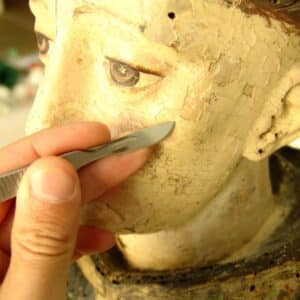
- Remedial conservation
- Restoration

1.2 – Process of intervention
- Analysis and survey of the state of conservation
- Formulation of the conservation and restoration intervention project
- Registration
1.3 – Key intervention principles
2 – Preventive Conservation
- Goals and benefits
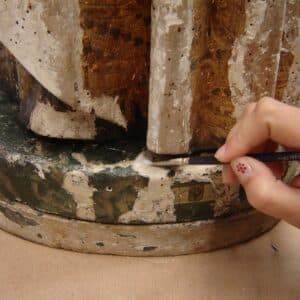
- Good practice guide for the preservation of works of art

3- Support and Decoration
3.1 – Wood as a support
- Characteristics of wood
- Cutting and assembly
- Carving
3.2 – Polychromy and decoration
- Preparation
- Decorative techniques
4 – Conservation and restoration techniques
4.1 – Criteria and principles of intervention
4.2 – Previous procedures
- Characterization
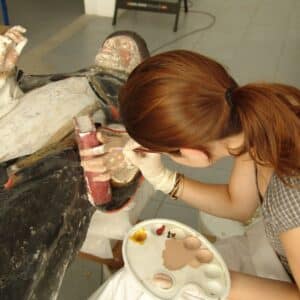
- Analysis and diagnosis

4.3 – Intervention methodology
- Support treatment
- Treatment of surface layers
- Pre-fixing and fixing
- Consolidation
- Cleaning
- Filling gaps
- Chromatic reintegration
5 – Case studies
Read the FAQs about the Sculpture Conservation and Restoration course (Gilded and Polychrome Wood) and find out more about restoration techniques, sacred art, religious imagery and their professional application in the preservation of cultural heritage.
FAQ – Frequently asked questions about the technical course in sculpture conservation and restoration
What is the conservation and restoration of gilded and polychrome wood sculpture?
The conservation and restoration of gilded and polychrome wood sculpture consists of the set of techniques used to preserve, stabilise and restore historical sculptures, sacred art and religious imagery, whilst respecting the original materials and the heritage value of the works.
Does this course cover the conservation and restoration of sacred art?
Yes. The course has a special focus on the conservation and restoration of sacred art, religious imagery, devotional sculptures and polychrome sculptural heritage.
What sculpture restoration techniques are taught?
The course covers cleaning techniques, consolidation, fixing polychromy, stabilising wood, preventive conservation, the study of gilding and methodologies for working on sculptural heritage.
Is the course suitable for beginners?
Yes. The course is suitable for beginners interested in conservation and restoration, as well as for professionals wishing to deepen or systematise their knowledge of polychrome and gilded sculpture.
Does the course include content on preventive conservation?
Yes. Preventive conservation applied to sculptures, sacred art and religious heritage is one of the fundamental topics of the course.
Who working with religious heritage can benefit from this course?
Yes. The course is particularly useful for professionals involved in the conservation of churches, museums, religious collections, cultural heritage and sacred imagery.
Why is the conservation of polychrome sculptures important?
The conservation of polychrome sculptures is essential to protect historical materials, traditional artistic techniques and the cultural and religious value of the works over time.
Does the course cover gilding and polychromy techniques?
Yes. The programme includes content related to the production techniques of the works: gilding, historical polychromy and traditional materials used in decorative and religious sculpture.
Can the training be applied in professional contexts?
Yes. The knowledge acquired can be applied to conservation and restoration projects, cultural institutions, museums, religious heritage and collections of sacred art.
Why study sculpture conservation and restoration at Citaliarestauro?
Citaliarestauro provides specialised training in cultural heritage, conservation and restoration, with content focused on practical application and the enhancement of artistic heritage.